Can You Download Text Messages from iPhone
If you need to back up iPhone messages, print conversations for legal purposes, or keep a record of important chats, the first step is to download text messages from your iPhone to a computer.
Apple's built-in tools like iTunes and iCloud only create whole-device backups—you cannot open, view, or selectively export text messages from them. This article will walk you through two effective third-party message transfer software to get texts in a readable, shareable format (PDF, HTML, CSV/Excel, or pure text, or RSMF).
| Method |
Export Format |
Best For |
Limitations |
| EaseUS MobiMover |
PDF, HTML |
Users who want an all-in-one tool to back up and print messages easily |
🔹Up to 20 files per day for free transfer;
🔹$69.95 for a lifetime subscription
|
| iMazing |
Excel, CSV |
Professionals who need organized, searchable archives or legal evidence |
🔹$49.99 per year for 5 devices |
| Email |
Plain text |
Occasional users who only need to keep a few conversations |
🔹No bulk export
🔹formatting lost
|
| Screenshots |
Image (jpg/png) |
Preserving the original look of short chats (e.g., proof, memories) |
🔹Time-consuming for long threads
🔹not searchable
|
Download Text Messages from iPhone as PDF or HTML File
If you need to keep your iPhone conversations for legal, business, or personal reasons, exporting them as PDF or HTML files is one of the most reliable solutions. With EaseUS MobiMover, you can directly transfer text messages, iMessages, and even attachments from your iPhone to your computer in just a few clicks. Mac and Windows PC are both supported.
The iPhone transfer software tool allows you to save the data in PDF or HTML, making it easy to print, archive, or search through your conversations. Exporting to PDF (unchangeable, timestamped, printable) is the most reliable format for legal or business purposes.
Unlike iTunes or iCloud, which keep messages locked inside a backup, MobiMover lets you:
- Export iPhone messages in HTML format (easy to open with any browser).
- View, print, and search conversations on a computer.
- Save attachments like photos or videos along with your texts.
- Preserve messages for legal or business purposes
It also works for other data types—photos, videos, contacts, books, music, and more.
How to Export iPhone Messages in Multiple Formats via EaseUS MobiMover
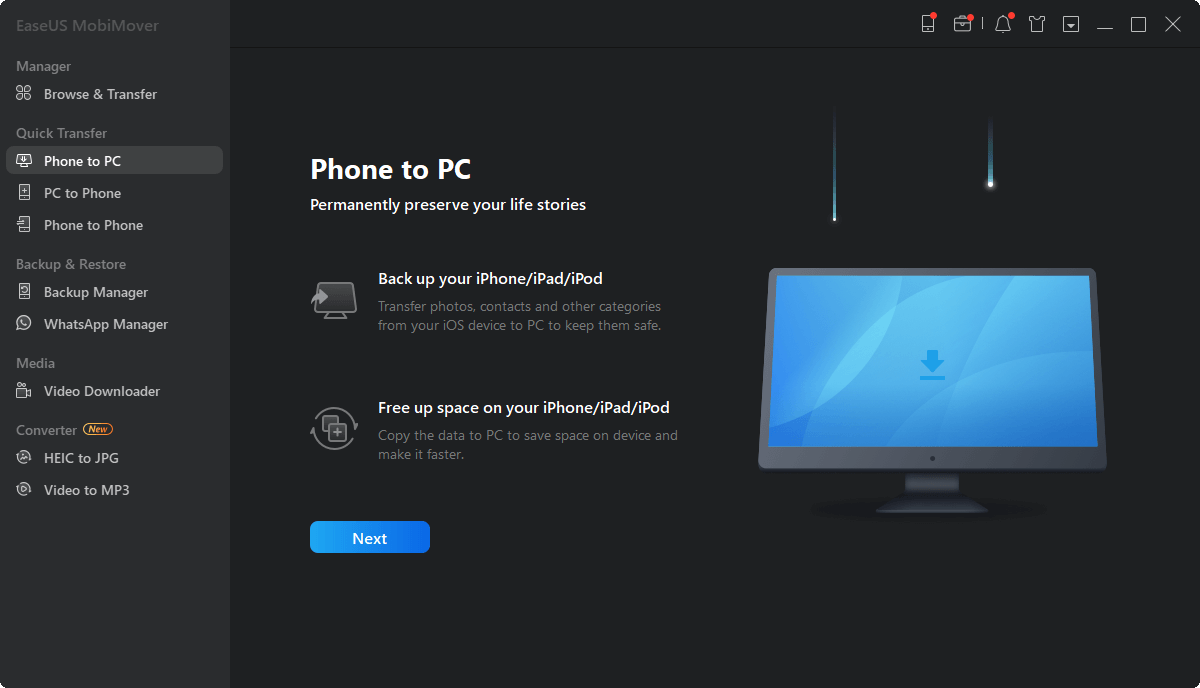
Step 1. Connect your iPhone to the computer via USB and tap Trust when prompted. Open EaseUS MobiMover and choose Phone to PC.
![How to copy messages from iPhone to computer - Step 1]()
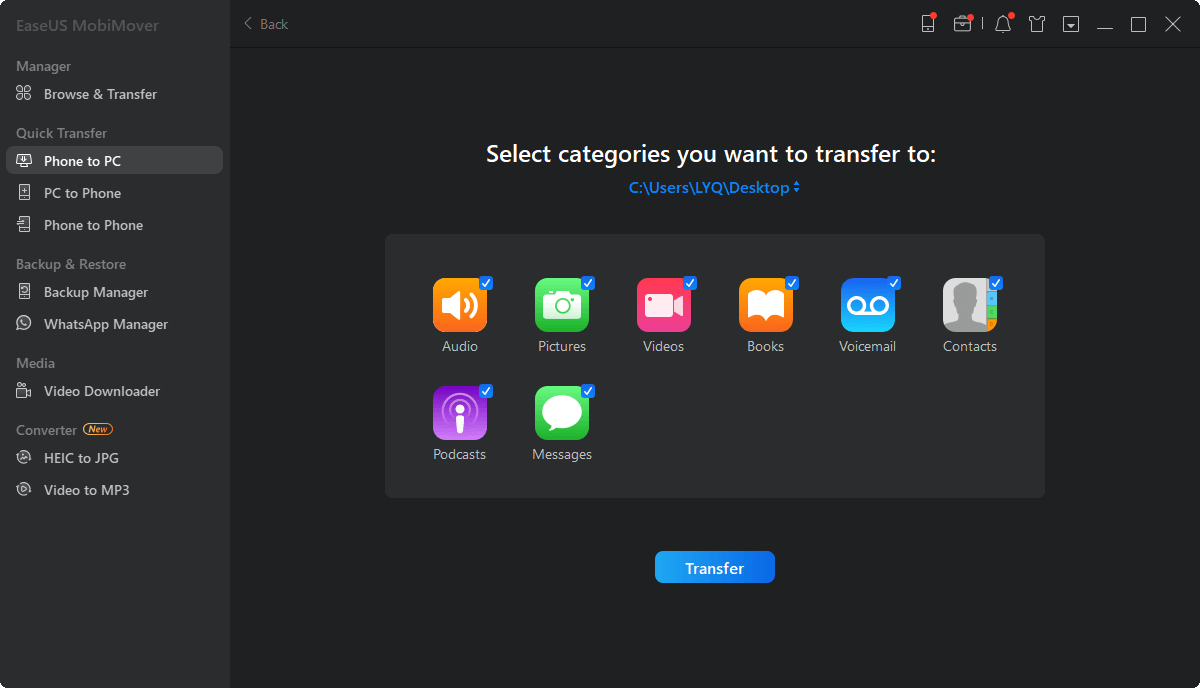
Step 2. Select Messages as the export type and customize the save location to keep things organized. Then click Transfer.
![How to copy messages from iPhone to computer - Step 2]()
❇️ Tip: Apart from Messages, you can also transfer other data type showed on the screen (such as photos, cideos, and contacts) based on your needs.
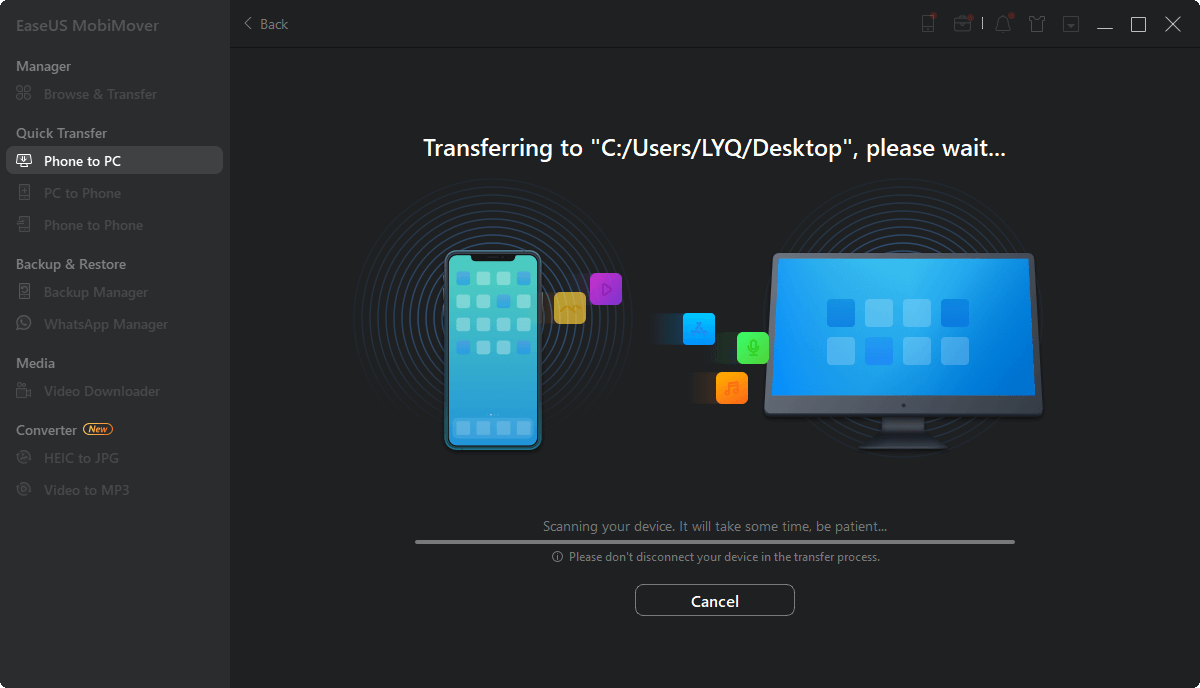
Step 3. Your messages will be saved as PDF and HTML files. The latter format enables you to open messages in Chrome, Safari, or Edge.
![How to copy messages from iPhone to computer - Step 3]()
There is a video guide for downloading text messages from your iPhone, whether it's out for printing for court or backup purposes.
More Tips about EaseUS MobiMover:
If you are switching to a new iPhone, like iPhone 16/17, you can directly transfer messages from one iPhone to another without moving it to PC.
For iCloud Messages, it also enableas you to sign into your Apple account and manage your iCloud messages.
Save Text Messages from iPhone as Excel or CSV File
For users who prefer to manage and analyze their text messages in a spreadsheet format, iMazing offers the option to export iPhone conversations as CSV or Excel files. This is particularly useful if you need to organize data, filter specific contacts, or prepare messages for legal or professional documentation.
How to Export SMS, iMessage, and WhatsApp Chats with iMazing
Step 1. Open the program and connect your iPhone with a USB cable.
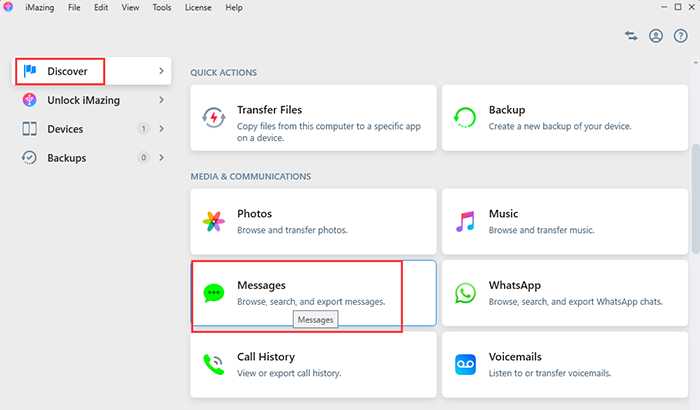
Step 2. From the Discover sidebar, choose Messages.
Step 3. Then select Full Backup or Data Access Only to select the threads you want to transfer to your computer. It mgiht be a while to loading all the conversations in the Messages app.
Step 4. Right-click the threads ans choose the format that you want to export. If you need structured data for spreadsheets, choose Excel or CSV. If you prefer ready-to-print copies, select PDF.
Step 5. Choose a folder on your computer where you want to save the exported messages. The software will process the files and create an archive that you can access anytime.
![select messages to transfer]()
Export Text Messages on iPhone as Plain Text
If you don't want to install additional software, forwarding text messages via email or another messaging app is the most straightforward method. However, keep in mind that this method doesn't give you structured files like CSV or HTML — the texts are saved as plain text inside an email body.
What You Get with Email Export
- Format: Plain text in email or message body (no timestamps in bulk, no attachments included unless forwarded one by one).
- Best For: Sharing short conversations with others, moving a single thread to another device, or keeping a personal backup in your email account.
- Limitations:
- Time-consuming for long conversations.
- Conversations lose their original layout (no bubble view).
- No batch export — you need to forward manually.
How to Save Message/iMessage as Plain Text with Email
Step 1. In the Messages app, tap the conversation you'd like to save. Then press and hold any of the texts in the conversation.
Step 2. When the options appear, choose "More".
Step 3. Now select the other texts you'd like to copy. Afterward, click the "Forward" icon in the lower right corner. Enter a phone number or email address and click the "Send" button to download text messages from your iPhone via Email.
Extra Tip: Save iPhone Text Messages via Screenshots
Screenshots are the quickest way to capture conversations exactly as they appear on your iPhone. This method preserves the full visual layout of your chats, including timestamps, emojis, and multimedia, which makes it useful when you need to print or present a conversation in its original format.
For example, many people rely on screenshots when submitting chat records as part of small claims evidence or simply keeping a personal memory intact. And it's more convinient to send a screenshot of a message conversation than a PDF or Excel file on Facebook or other messaging apps.
This method has obvious drawbacks; the image files (JPG/PNG) can't be searchable like text-based files and the process is also tedious for long conversations, as you must capture each screen manually. This makes screenshots best suited for short, visually important conversations, rather than long-term or large-scale archiving.
In What Format Would You Like to Download the iPhone Messages?
Different export methods give you different formats:
HTML (EaseUS MobiMover): Easy to browse, supports search, good for archiving.
PDF (via browser print or email export): Best for court/legal submissions or official records.
CSV/Excel (other tools): Useful if you need structured data (e.g., timestamps, numbers).
Screenshots: Best for visual proof of message layout, emojis, and attachments.
👉 If you need to print for court, go with PDF or screenshots.
👉 If you want to archive or search old messages, HTML or CSV is better.
Frequently Asked Questions
1. Can I export iPhone messages without a computer?
Yes. If you only need a few conversations, you can forward them via Email or messaging apps, or take screenshots. But these methods won’t keep the original formatting or allow bulk export.
2. What's the best way to export all messages at once?
For full conversations, attachments, or years of messages, you’ll need a desktop tool like EaseUS MobiMover or iMazing. They let you export everything in one click and save messages as readable files (HTML, PDF, or text).
3. Which export format should I choose?
- PDF: best for legal records, evidence, or archiving with timestamps.
- HTML: keeps original iMessage style, easy to read on any browser.
- CSV/Text: compact, searchable, and great for analysis or logs.
4. Can I transfer messages to a new iPhone instead of exporting?
Yes. Tools like EaseUS MobiMover can directly migrate messages between two iPhones, so you don't need to export first.
5. Will exported messages include images, videos, and attachments?
That depends on the method:
- Email/Screenshots: include images manually but limited for bulk use.
- MobiMover/iMazing: export with attachments in original quality.
The Bottom Line
Apple doesn't offer a direct “export” button for iPhone messages. Workarounds like email or screenshots are fine for short chats, but if you need a full archive or print-ready file, a professional transfer tool like EaseUS MobiMover is the most efficient choice.
After exporting, you can decide whether to keep your messages as HTML for browsing, PDF for printing, or screenshots for visual records. This flexibility ensures your iPhone messages are preserved securely and can be used whenever you need them—whether for backup, personal use, or legal purposes.




 NEW
NEW HOT
HOT
